

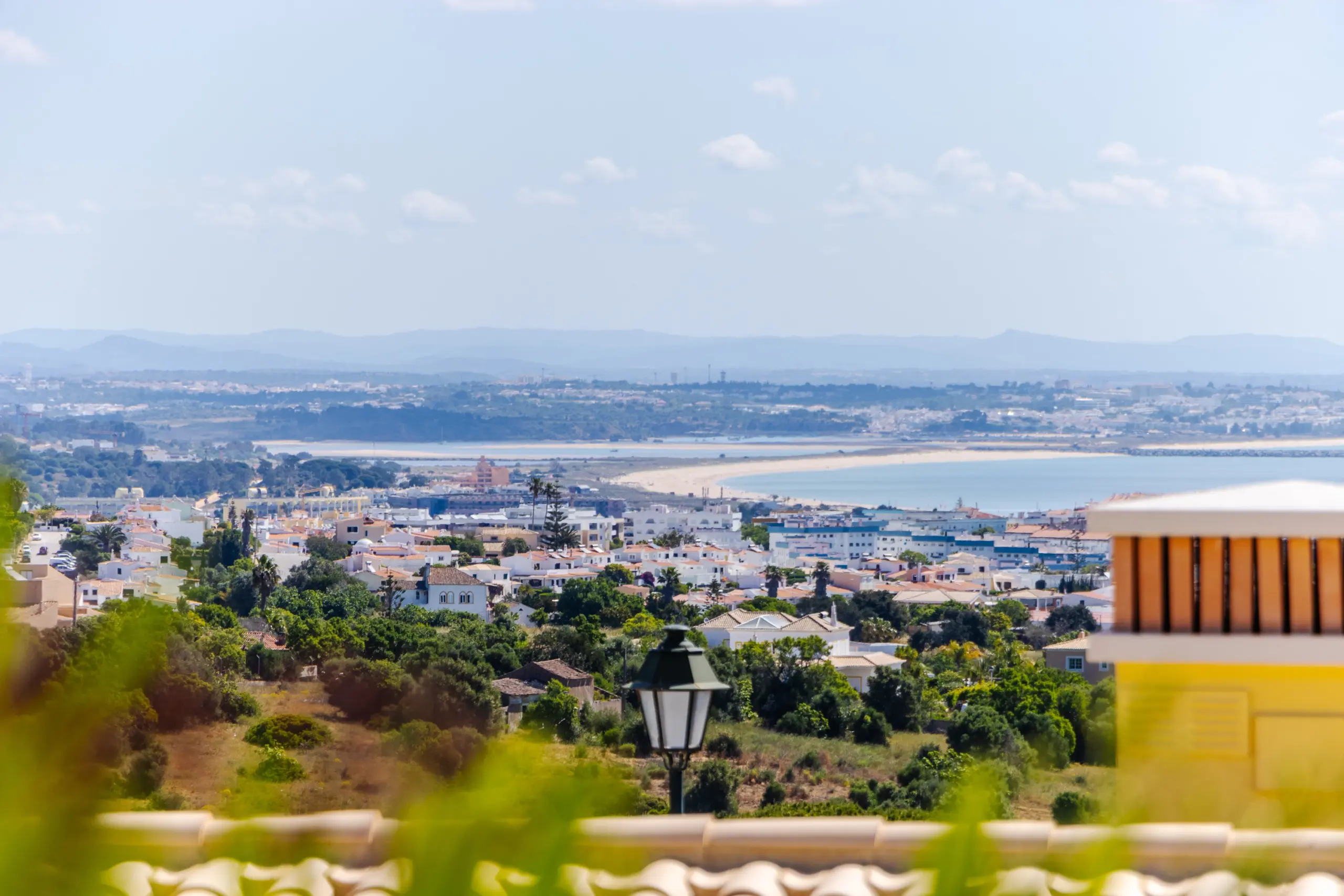
Foreign families who buy in Lagos and the wider western Algarve tend to think about succession only after the keys are handed over. A Portuguese title sits inside a different legal framework to the home in the UK, the Netherlands or the United States, and that framework decides what happens on death. Assumptions that English or American law will follow the property across the border surface as a problem at the wrong moment.
Quick Answer
- Portuguese property is, by default, governed by Portuguese succession rules
- Portugal applies forced heirship, reserving part of the estate for spouse, descendants or parents
- Owners can elect their nationality’s law to govern the succession in a valid will
- A 10% Stamp Duty (Imposto do Selo) applies to non-direct heirs
- Spouses, children, grandchildren, parents and grandparents are exempt from that charge
- Probate runs through a Portuguese notary and takes several months
Why Portuguese Law Applies by Default
Since August 2015 the EU Succession Regulation 650/2012, often called Brussels IV, has governed cross-border estates across most of the EU. The default rule is that the law of the deceased’s last habitual residence applies to the entire estate, including immovable property abroad. For a family that has retired to the Algarve, that points at Portuguese law, which brings forced heirship with it.
For owners who continue to live in the UK or the United States, Portuguese rules still tend to apply to the property as a matter of practical administration. The notary and registry handle the local steps, and Portuguese tax rules apply regardless of where probate is run.
Forced Heirship in Outline
Under the Civil Code, close relatives sit as herdeiros legitimários, entitled to the legítima, a reserved portion of the estate that cannot be freely given away by will:
- Where a spouse and descendants survive, the reserved share is typically two-thirds
- Where only a spouse or only descendants survive, it is typically one-half
- Where neither survives, parents or other ascendants can be the protected class
A foreign owner cannot, for example, leave the whole of an Algarve villa to a second spouse, a charity or a single chosen child if Portuguese law applies and protected heirs exist. The reserved share takes priority over the will.
The Brussels IV Election
Article 22 of the Regulation lets an individual choose the law of their nationality to govern their succession, provided the choice is made expressly in a will. For a British, Dutch or German owner, the election is often the cleanest way to disapply Portuguese forced heirship and keep the estate aligned with rules they already understand. The European e-Justice Portal sets out how the mechanism works across the participating member states.
The Regulation governs civil succession, not tax. Even where English or Dutch law decides who inherits, Portuguese Stamp Duty decides what is owed locally. Most international owners therefore hold a Portuguese will for their local assets alongside a home-country will for everything else.
Tax on Inheritance of Portuguese Property
Portugal abolished classical inheritance tax in 2004. What remains is Imposto do Selo, a Stamp Duty on gratuitous transfers of Portuguese-sited assets, including inheritances and lifetime gifts. The headline rate is 10%, with a surcharge bringing the effective burden on real estate to 10.8%. The code and rate schedules are published by the Portuguese Tax Authority.
The exemption is the point that matters for most families. Spouses, civil partners, children, grandchildren, parents and grandparents are exempt on Portuguese assets they inherit or receive as a gift. Siblings, more distant relatives and unrelated beneficiaries pay 10% on the tax value of what they receive.
How the Process Runs
When an owner dies, the Portuguese steps are administrative as much as legal, and run alongside any probate in the home country:
- A habilitação de herdeiros, the notarial declaration identifying the heirs, is normally requested within three months
- Stamp Duty filings, where due, are made to the Portuguese Tax Authority, typically within six months
- The escritura de partilha records how the estate is divided between the heirs
- The Land Registry is then updated to reflect the new owners
- Foreign documents are usually required with an Apostille and a certified Portuguese translation
For an otherwise straightforward estate the Portuguese steps take several months. Where translated documents travel between jurisdictions and a UK or American probate runs alongside, the realistic timetable is often closer to a year.
Common Mistakes
- Assuming a UK or American will, on its own, deals neatly with the Portuguese property
- Not making the Brussels IV election when home-country rules would actually be preferable
- Leaving the property in joint names without a clear plan for what happens on the first death
- Overlooking the Stamp Duty exposure for nieces, nephews, stepchildren and unmarried partners
- Waiting until after death to start gathering documents that take months to apostille and translate
Summary
Owning property in the western Algarve introduces a second legal system to a family’s estate planning, and Portuguese rules will apply unless steps are taken to manage that exposure. Forced heirship, the Brussels IV election and the 10% Stamp Duty for non-direct heirs together create a handful of decisions that are far easier to take while the owner is alive. Done in advance, the cost is mainly time with an advogado and a notary. Done afterwards, it falls on the family.
At B&P Real Estate, we work with buyers across Lagos and the wider western Algarve. Our notes on property law before buying in the Algarve and our deed guide for property in Portugal cover the transactional side. If you are looking at property in our patch and would like an introduction to the Portuguese lawyers and notaries we know well, or our sister-company, Inspired Accounting, please get in touch.