

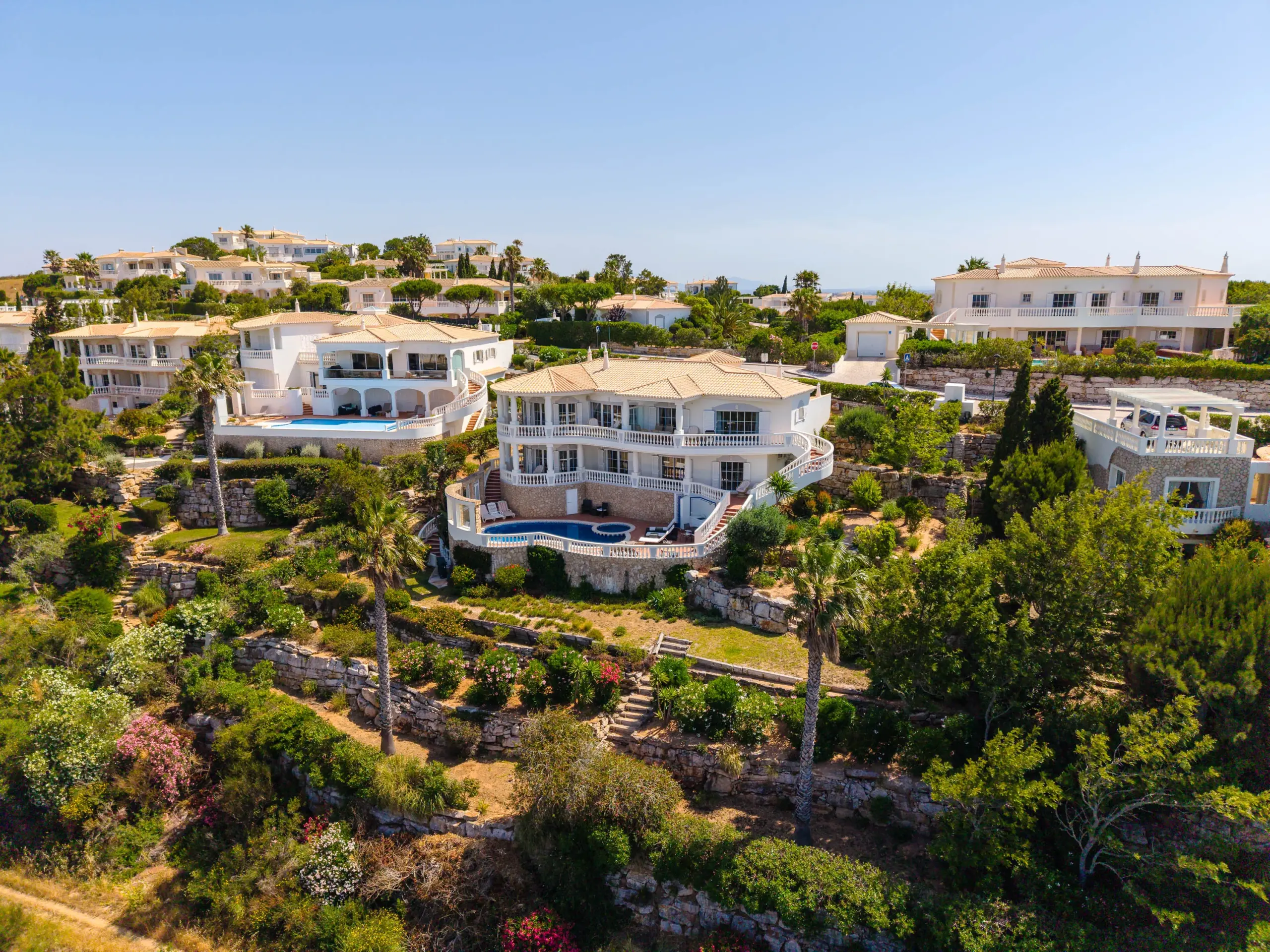
Many overseas buyers assume they will pay for an Algarve home in cash, then find that a Portuguese mortgage is both available to them and worth weighing up. Non-residents can borrow from Portuguese banks, though the terms differ from a resident’s. This guide sets out what a non-resident mortgage looks like in 2026, from how much you can borrow to the insurances a bank insists on.
Can Non Residents Borrow in Portugal
Yes. The main Portuguese retail banks lend to non-residents, and several run dedicated international desks. Lenders such as Millennium BCP, Novo Banco, Santander Totta and Bankinter take non-resident files, though each sets its own appetite for foreign income.
Terms depend heavily on where your income comes from and in what currency. A buyer earning in Euros is treated more generously than someone earning in sterling or dollars, because the bank carries no currency mismatch.
How Much You Can Borrow
Non-resident loan to value sits below the resident level. In 2026 most banks lend around 60 to 70 per cent of the lower of price and bank valuation, with Euro-earning EU buyers at the upper end and non-Eurozone buyers nearer the floor.
- A deposit of roughly 30 to 40 per cent of the price for most non-resident applicants
- Terms of up to 30 years available, though your age at the end of the loan usually caps this
Rates and How They Are Set
Variable Portuguese mortgages are priced as Euribor plus a fixed spread. The Euribor part moves with the market, while the spread is set in your contract for the life of the loan. In June 2026 the twelve-month Euribor averaged around 2.8 per cent and the six-month around 2.6 per cent.
Spreads for non-residents commonly run between roughly 0.85 and 1.5 per cent, with the sharpest offers nearer 0.6 per cent. On a twelve-month Euribor of 2.8 per cent, a spread of 0.9 per cent produces a nominal rate near 3.7 per cent. Fixed and mixed-rate options also exist.
What the Bank Will Ask For
A non-resident file rests on proof that you can service the loan and that your funds are clean. Portuguese banks apply the same anti-money-laundering checks as any EU lender, so build the paperwork early.
- A valid passport and your Portuguese tax number, the NIF
- Recent pay slips and an employment contract, or company accounts if you are self-employed
- Personal bank statements and your latest tax returns, usually for the past two years
- The signed CPCV, the promissory contract, once you are under offer
- Documents issued outside Portugal, often translated and apostilled
Affordability and the Stress Test
Portuguese lending follows macroprudential rules set by the Banco de Portugal, which cap total credit repayments at 50 per cent of net monthly income. For non-residents most banks work inside that, nearer 30 to 35 per cent.
Banks also test your file against a higher hypothetical rate rather than today’s alone, so a rise in Euribor would not immediately push you past the ceiling. The effect is a more conservative maximum loan than the headline percentage might suggest.
Valuation, Insurance and Costs
Before lending, the bank sends its own valuer to set the figure it will lend against. This valuation can come in below the price you agreed, in which case the loan is worked out on the lower number and you cover the difference.
- A bank valuation fee, paid by you, for the lender’s own survey
- Mandatory life insurance assigned to the bank, covering the outstanding balance
- Buildings insurance in place from completion, which lenders require as a condition of the loan
- Imposto do Selo, the stamp duty on the mortgage itself, at around 0.6 per cent of the loan
- Arrangement and commission fees that vary from one bank to the next
Buildings insurance here is a lending condition, not a legal duty. Fire cover is compulsory by law only for apartments in a condominium, but a bank insists on buildings cover on any property it finances.
The Timeline
A non-resident mortgage usually runs alongside the purchase rather than holding it up. From a complete application an offer commonly takes a few weeks, and the escritura is booked once the bank confirms it will release funds. The main cause of delay is missing or untranslated paperwork, so gathering documents before you find the property is time well spent.
A Note on Currency
If you earn outside the Eurozone, your deposit and any repayments from a foreign account move at the exchange rate of the day. This sits outside the mortgage and is not something a lender advises on. The cost of a Euro loan in sterling or dollars can shift over time, and moving the money is for you and your own bank to arrange.
Where a Finance Specialist Fits
Non-resident files reward specialist handling, because banks weigh foreign income differently and the paperwork is fiddly. Our sister company, Inspired Mortgages, handles exactly these files for western Algarve buyers and deals directly with lenders on the offer and its conditions. Our earlier guide to the mortgage offer for non-resident buyers covers how a Portuguese offer document reads.
Summary
A Portuguese mortgage is open to non-residents in 2026, usually at 60 to 70 per cent loan to value, priced as Euribor plus a spread, and conditional on life and buildings insurance. The numbers are workable, but the file needs care and the deposit is larger than a resident’s.
If you are weighing up Algarve property for sale and want help finding the right home, please get in touch with the team at B&P. We help you find the property and understand what owning it involves, and for the finance itself we point you to Inspired Mortgages.