

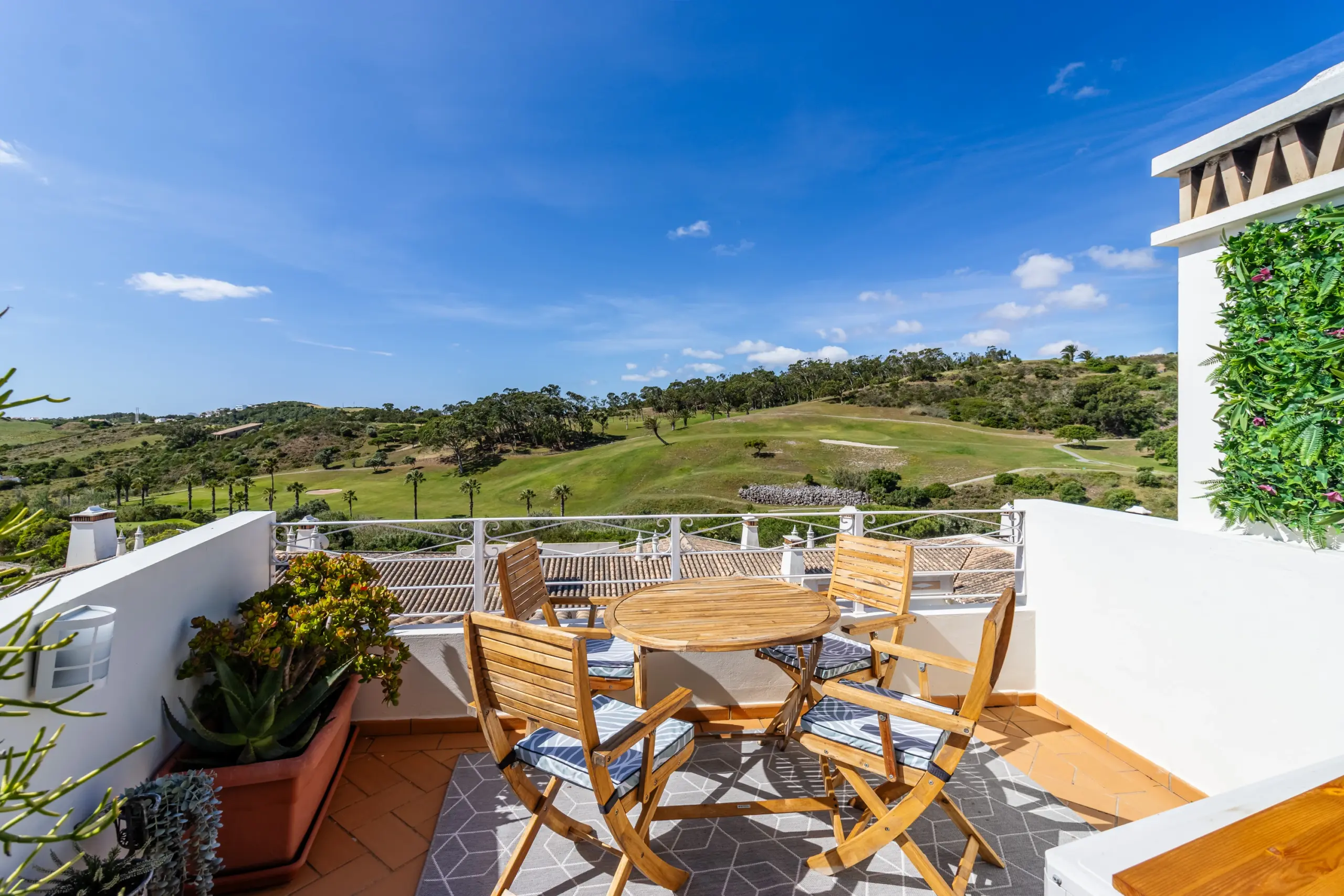
Most buyers first see the western Algarve in high summer, when the beaches are busy and every terrace is full. The off-season tells you more. From roughly November to March the coast from the west side of Alvor through to Sagres is quieter, milder than much of northern Europe and a good deal more revealing about what year-round life here actually involves. Anyone thinking of buying is well served by picturing the place in January as well as August.
This is an observational take on how the western Algarve feels once the crowds leave, based on what owners and buyers tell us. It is not a climate guarantee or a promise about any single winter, since weather varies from year to year. The point is to help you judge whether a home here suits the way you want to use it across all twelve months, and not just the warm ones.
The winter climate in plain numbers
The headline draw is real enough. The Algarve records around 300 days of sunshine a year and close to 3,000 hours of sun, and winter daytime highs on the coast usually sit around 16 to 18 degrees. Nights are cooler, rain arrives mainly between November and February, and it very rarely drops near freezing on the coast. The sea cools to about 16 degrees, so winter swimming is for the hardy, but bright, still days are common through the colder months.
- Winter daytime highs on the coast commonly around 16 to 18 degrees
- Roughly 300 days of sunshine across the year, with most rain from November to February
- Sea temperature near 16 degrees in winter, warmer again by late spring
- Frost on the coast is rare, though inland hills can feel sharper at night
How the towns change out of season
The character of each town shifts once the visitors thin out. Lagos keeps a genuine year-round life, with its old town, weekly market and working marina busy with residents rather than tourists. Praia da Luz settles into a calmer village rhythm, and the smaller places towards Burgau, Salema and Vila do Bispo go quiet, which is exactly what some owners want. Sagres, out on the western tip, stays lively with surfers and walkers well into the autumn before it too slows down.
What stays open and what winds down
Not everything runs at full tilt through the winter, and it helps to know that before you buy. The larger towns keep a solid core of restaurants, supermarkets, clinics and services open all year, so daily life is comfortable in and around Lagos. Some seasonal beach bars and holiday-focused businesses close from late autumn until spring, more so in the smaller villages. Owners who want winter buzz tend to favour Lagos, while those after peace are happy further west.
- Lagos and the larger centres keep shops, clinics and restaurants open year round
- Smaller village businesses often close from late autumn to spring
- Coastal walking, cycling and the boardwalk trails stay comfortable through the mild winter
The case for a lock-up-and-leave base
For owners who split the year between two countries, the off-season shapes what kind of home makes sense. A property that can be closed up and left without worry has obvious appeal, and that pushes many part-year owners towards apartments in a managed building. The current listings of Algarve apartments for sale show how much of the town stock is set up for exactly this pattern of use. A villa can work the same way, though it needs someone to look in on it and keep the garden and pool in order while you are away.
How the resident community carries on
One thing that surprises first-time buyers is how much of the international community stays put through the winter. Retirees and remote workers from across northern Europe keep Lagos and the nearby villages sociable in the quieter months, with regular markets, clubs and events carrying on at a gentler pace. The summer visitors leave, yet a settled year-round community remains, and that matters if you plan to spend real time here rather than a fortnight a year.
What to check if you plan to be here year round
A home that is lovely in August can be less comfortable in a damp January, so winter livability is worth a look on any viewing. Older Portuguese houses were often built for the heat rather than the cool, and heating, insulation and damp are the details that separate a pleasant winter home from a chilly one. As a rough reading anchored to the idealista house price report, Lagos values sit around €4,500 to €4,600 per square metre in 2026, and at those levels buyers are right to expect a home that works in winter as well as summer.
- Effective heating and good insulation for the cooler, damper months
- Signs of damp or poor ventilation, which show up more in winter
- Which local shops, clinics and services stay open near the property year round
- How the property feels on a grey day, and not only in bright sunshine
Summary
The western Algarve out of season is milder and quieter than most first-time visitors expect, with Lagos keeping a real year-round life while the smaller villages slow right down. The climate is a genuine draw through the winter, though winter comfort inside a home comes down to heating, insulation and damp rather than the weather outside. Seeing a property in the colder months, or at least picturing it there, is one of the more useful things a buyer can do.
If you want to understand how a particular home or town feels once the summer ends, our team at B&P Real Estate can walk you through what stays open, what winds down and how each spot between Alvor and Sagres changes with the seasons. If you are still comparing options, our range of Algarve property for sale covers the town apartments and village villas where these differences play out. It is straightforward local help on the homes we sell.
